Hi-Vis Vest Sizes Explained: Getting the Fit Right for Your Crew
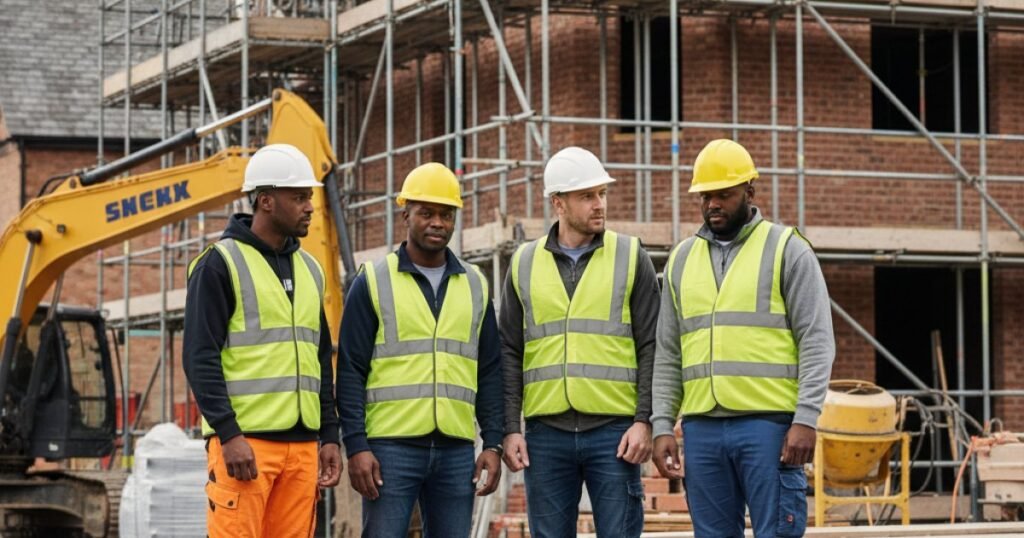
Last reviewed: 16 October 2026 · Written and reviewed by the Xcel Print & Promotions team
Published: 16 October 2026
Getting hi-vis vest sizes right matters more than most buyers realise. A vest that’s too small can’t be fastened safely and restricts arm movement on site; one that’s too large flaps around equipment and loses its visibility impact. Sizing runs differently across brands and garment types, so this guide explains exactly how to measure your team, interpret size charts, and order confidently, whether you’re kitting out two people or two hundred.
Why Hi-Vis Vest Sizing Is More Complicated Than a Standard T-Shirt
With a T-shirt, a rough chest size usually gets you close enough. Hi-vis vests are a different beast. They’re designed to be worn over other clothing, a fleece mid-layer in January, a thick site jacket in December, or just a polo in summer. The same person might need a different vest size depending on the season and what they’re wearing underneath.
There’s also the question of cut. Most waistcoat-style vests use an adjustable side fastening or Velcro panels, which gives some flex, but only so much. If the vest can’t lay flat across the chest and shoulders when fastened, it’s the wrong size. On the other hand, a vest so large it hangs off the shoulders creates its own hazards: reduced reflective tape coverage where it counts, and a garment that can catch on machinery, scaffold poles or vehicle doors.
From what we see day-to-day in our workshop, the most common sizing mistake is ordering everything in ‘XL because it fits over a jacket.’ That logic holds for one person. Across a crew of fifteen with different builds, it creates a jumble of badly fitting vests that look amateur and, more importantly, compromise visibility on site.
How to Measure for a Hi-Vis Vest
You need two measurements: chest circumference and vest length (centre back, neck to hem). Take both measurements while wearing your typical base layer or mid-layer, whatever will usually sit under the vest.
- Chest: Measure around the fullest part of the chest, under the arms, keeping the tape horizontal. Add around 5-8 cm for comfortable movement over base layers. Add more if staff regularly wear heavyweight fleeces or padded jackets underneath.
- Length: Most standard adult vests sit between 60-70 cm centre-back. If your team includes shorter individuals or staff who regularly crouch or climb ladders, a shorter vest with a trim fit is far more practical than a longer, bulkier one.
- Shoulders: Vest shoulder seams should sit at the natural shoulder, not drooping down the arm (too big) or pulling toward the neck (too small). This is the measurement most people ignore and the one that causes the most fit problems.
Write these down before you order anything. A quick five-minute measure-up for each person saves you the hassle of returns and re-orders, and with custom printed hi-vis, a returns process is more complicated once the logo is on the garment.
What Do the Size Labels Actually Mean?
Most hi-vis vests use standard S-5XL labelling, but the underlying chest measurements vary by brand. Here’s a general guide, always cross-reference with the specific brand’s size chart before ordering:
| Label | Typical Chest (to fit) | Best suited to (base layer only) |
|---|---|---|
| S | 34-36 in / 86-91 cm | Slim build, standard T-shirt underneath |
| M | 38-40 in / 96-101 cm | Average build, T-shirt or light shirt |
| L | 41-43 in / 104-109 cm | Average-larger build, polo or sweatshirt |
| XL | 44-46 in / 111-116 cm | Larger build, or M build wearing a fleece |
| 2XL | 47-49 in / 119-124 cm | Larger build with mid-layer, or broad shoulders |
| 3XL+ | 50 in+ / 127 cm+ | Heavy outerwear underneath, or larger frames |
Note that some brands, particularly workwear-focused lines like Portwest and Beeswift, run their sizing with generous allowances specifically because their vests are designed for layering. Others, particularly fashion-adjacent or event-use vests, can run a size smaller. If in doubt, contact us before ordering and we’ll point you to the right product and size chart.
Should You Size Up for Layering?
As a general rule: yes, by one size if staff regularly wear a heavyweight sweatshirt or fleece underneath, and potentially two sizes if they’re in a padded jacket or bib-and-brace overalls. But don’t just blanket size-up for everyone. A slimmer team member in a T-shirt in an XL vest is worse than one in a well-fitting L. Take the time to assess each person individually, or at least group your team into realistic layering scenarios and order accordingly.
For trades working outdoors year-round, we often recommend ordering two vests per person in slightly different sizes: a fitted size for summer wear over a polo, and a size up for winter. It sounds like an extra cost but it’s relatively modest, and it means the vest always fits properly and the reflective strips always sit where they should. Browse our bundle deals, packs of 25, 50, 100 or 250 printed vests at a fixed price with your logo included, which make this kind of dual-season ordering genuinely cost-effective.
A Worked Example: Kitting Out a Mixed Groundworks Crew
Imagine a groundworks company with twelve staff: a mix of labourers, a site supervisor, a couple of apprentices, and an office-based contracts manager who visits site weekly. They work outdoors all year and wear company sweatshirts most days, moving to padded jackets from October to March.
Rather than ordering twelve of the same size, a sensible approach looks like this:
- Measure each person’s chest over a sweatshirt (their most common base layer).
- Order vests to fit that measurement, this gives a comfortable fit for 80% of working days.
- For the three or four staff who regularly wear padded jackets, order one size larger as a winter vest.
- The contracts manager, who visits site occasionally and rarely wears heavy layers, orders a standard fitted size.
The result is a crew that looks uniform, professional and, critically, is properly visible on site every day, not just when the vest happens to fit that day’s outfit. With personalised workwear carrying the company logo, it also makes a strong impression with clients visiting site.
Who This Guide Isn’t For
If you’re buying a handful of plain vests for a one-off event, a quick site visit or short-term cover, exact sizing matters less, plain stock ships faster and adjustable side fastenings mean most adult vests cover a reasonable range. Our advice here is aimed at businesses ordering workers’ clothing as part of a proper uniform, where the vests will be worn daily, washed regularly and need to look right over time.
It’s also worth saying: if you’re working in a sector where EN ISO 20471 compliance is a contractual or legal requirement, fit is part of compliance, not just comfort. A vest that can’t be properly fastened or doesn’t provide adequate coverage at the correct chest position doesn’t meet the standard, regardless of what’s printed on the label. If you’re unsure whether your application requires certified hi-vis, speak to your site safety officer or H&S consultant, that’s their area, not ours.
How to Order Branded Hi-Vis Vests Without Getting the Sizes Wrong
When you’re ordering custom hi-vis with your logo printed on it, there’s no easy way to swap sizes after decoration. Here’s how to get it right first time:
- Collect measurements before you order, not after. Send round a simple form or spend twenty minutes on site with a tape measure.
- Send a vector logo file (AI, EPS, SVG or PDF) or a high-res PNG at 1000px or wider. This gives us the cleanest result on the finished garment. Logo digitising for embroidery is free.
- Order a sample size if you’re unsure, for larger orders, it’s worth getting one vest in the size you’re considering before committing the full quantity.
- Allow proper lead time, lead times for customised items are 7-10 working days and vary with demand. Plain stock ships faster. Factor this in before a contract start date or site mobilisation.
Our printed hi-vis vest bundle deals, available in packs of 25, 50, 100 or 250, include your logo at a fixed price, making them the most cost-effective way to kit out a whole crew. Delivery is £5.95 + VAT, free on orders over £99 ex VAT.
If you have any questions about sizing, suitable products or what works best for your team’s working environment, get in touch with us, we’re happy to help you get it right before you order.
FAQs
Should I size up when ordering hi-vis vests to wear over a jacket?
Yes, generally by one size for a heavyweight fleece or sweatshirt, and potentially two sizes for a padded jacket or heavy outdoor coat. The key is to measure each person's chest while wearing their usual base layer, then match to the brand's size chart rather than applying a blanket size-up to the whole crew.
Do hi-vis vest sizes vary between brands?
Yes, they can vary noticeably. Workwear-focused brands like Portwest and Beeswift tend to build in generous layering allowances, while event or general-use vests may run smaller. Always check the specific brand's size chart before ordering, especially for bulk or printed orders where swapping sizes after decoration isn't straightforward.
Can I get hi-vis vests with my company logo printed on them?
Yes. Xcel Print & Promotions offer custom printed hi-vis vests, including bundle deals in packs of 25, 50, 100 or 250 vests with your logo included at a fixed price. Send your logo as a vector file (AI, EPS, SVG or PDF) or a high-res PNG at 1000px or wider for the best result. Logo digitising for embroidery is free.
How long does it take to get custom printed hi-vis vests?
Lead times for customised items are 7-10 working days and vary with demand. Plain stock ships faster. If you're working to a contract start date or site mobilisation, factor this in when placing your order.
What's the minimum order for printed hi-vis vests?
Xcel Print & Promotions operates with no minimum order, so you can order even a small number of branded vests. For better value on larger crews, bundle deals in packs of 25, 50, 100 or 250 printed vests offer a fixed price with the logo included.
Does vest fit affect EN ISO 20471 hi-vis compliance?
Yes, fit is relevant to compliance. A vest that can't be properly fastened, or that doesn't provide adequate reflective coverage in the correct positions, may not meet the standard regardless of its certification label. If your work requires certified hi-vis, always ensure vests can be fastened correctly over whatever clothing your team is wearing on site. For specific compliance questions, consult your site safety officer or H&S adviser.

Written by Andy · Founder, Xcel Print & Promotions
Xcel Print & Promotions is a family-run UK workwear, branded-clothing and print company with over 20 years' experience. We embroider and print in-house from our base in Haverhill, Suffolk, with no minimum order, so this advice comes from kitting out real teams every working day, from single tradespeople to large sites and schools.
Leave a Reply